moutarde-6 kade q
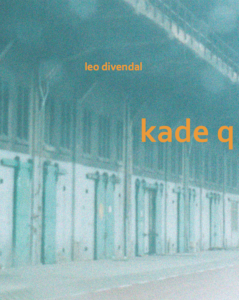
Er zijn twee soorten kades: havenkades en rivierkades. Havenkade is de grote broer van rivierkade. Aan havenkades kunnen zeeschepen of vissersboten aanmeren, aan rivierkades hooguit vrachtboten, sleepboten en plezierjachten, de zogenaamde strijkijzers.
Kade Quai Quay Kaai Kej Kaj cé cais….. In zoveel talen dezelfde directe kale klank.
Havenkades bevatten een pure functionaliteit waaruit ze bestaansrecht ontlenen. Er is geen enkele franje aan een havenkade, deze is kaal, sober, sterk en verlaten.
Rivierkades zijn vervoerskades, ook flaneerkades, de rivieren volgend tot in de stad. Aan rivierkades liggen handelshuizen, pakhuizen huizen van plezier, kroegen en restaurants, en ook dure patriciërhuizen.
Aan havenkades liggen grote pakhuizen, laad- en loshuizen, entrepots, industriële werkplaatsen en scheepswerven.
Havenkades hebben grondstoffelijke namen zoals : Zoutkade, Ertskade, Houtkade. Er is zelfs ergens een Mosterdkade. Of ze hebben nummers of letters.Kade Q bijvoorbeeld.
Rivierkades hebben zachte, poëtische namen als: Mauritskade, Hoefkade, Kostverlorenkade, Kade der Ongeneeslijken, Kade der Penitenti, Waalse Kaai, Vlaamse Kaai, Quai d’Orsay, Quai des Orfèvres, of Quai de Bercy aan de Seine waaraan de vaten wijn uit het oosten en zuiden gelost werden.
De havenkade heeft een strakke kale industriële vorm, waaraan een schip kan aanmeren, gemakkelijk kan lossen en laden.
Een kade heeft per definitie lange lijnen en de kracht van de materialen waaruit ze bestaat: beton, klinkers, ijzer, hardhout.
Water klotst tegen de kade en de kade moet tegen het zoute water bestand zijn.
Een kade is een intrigerend tussengebied, tussen laden en lossen, tussen aanvoer en doorvoer, tussen aankomst en vertrekken.
De havenkade is vaak het sinistere decor van crimi’s, de onherbergzaamheid ervan, de grootschaligheid, de industriële gebouwen of loodsen waar niemand lijkt te komen. Uitermate geschikt voor suspense en misdaad.
Quay quai kaai kej kaj cé cais kade… .. in so many languages a same direct and bald sound.
There are two types of quays: harbour quays and river quays. Harbour quay is the big brother of the river quay. River quays have soft, poetic names like: Kostverlorenkade (quay of lost costs in Amsterdam), Fondamenta degli Incurabili (quay of the incurable in Venice), Waalse Kaai (walloon quay in Antwerp), Quai des Orfèvres, or Quai de Bercy in Paris on the Seine river bank where wine barrels from the east and south were brought in by boat to the heart of the city. Harbour quays with large warehouses, entrepots, workshops and shipyards have raw material names such as: Salt Quay, Or Quay, Wood Quay. Or the Zandvaartkade (sand canal quay), just behind my birthplace in Heemstede, which runs to the small inner harbour on the Heemstede canal, ending in the river Spaarne. And there is probably also a port with a Mustard Quay somewhere. Or they only have numbers or letters. Quay q for example. Kade q.
The harbour quay has a tight industrial shape, where a ship can moor, with cranes for unloading and loading, on which cargo in bulk is deposited here and there as a square or rectangle. A quay shows long lines and contains the strength of the solid materials that makes it: concrete, clinkers, iron, hardwood. Water locks against the quay and the quay must be resistant to brackish water. The colours of the harbour quay are muted and draw towards each other. Rusty brown, grey, green, blue-grey, black, dull silver. The visual language of the port area derives from the quay itself with its adjacent buildings and on the other side from the abstract empty space of the water, cranes nearby and far away, ships disappearing further and further away in soft shades of grey, colours that flow into each other like in a painting by expressionist painters. A ship’s dock as a rural abstract representation. The quay is fauvist, such as the quays of Albert Marquet, Georges Simenon, Loustal. Quay is jazz music, the shrill tones of Miles Davis. People, as far as they are present, are only little painter streaks in the big space, wipes of suggestion.
The harbour quay is often a sinister décor in film and literature, radiating inhospitality, large scale, sheds where nobody seems to come along. Extremely suitable for suspense and crime. There is no frill on a harbour quay, which is bare, sober, strong and deserted. At the quays it usually rains or there is fog, a grey gloomy atmosphere, like a flat palette spread over the harbour scene in shape and colour.
The quay is, as often in my work, an intermediate area, of arriving and departing, of the visible and invisible, of the temporary. The quay is never a residence, only a place of passage. For me, the passage is one of the most intriguing places. Arriving is not interesting, the film just starts. Neither is leaving, the story has done. The passage is a place of crossing, of drama and theatre. Quay is passage. Many a film hero is killed on the quay. Many a love finds its foundation, its distance, its beginning or end. And a single moutarde-cahier finds its stage on the quay. After all, no story without mustard and no love without a logbook of her quay.